

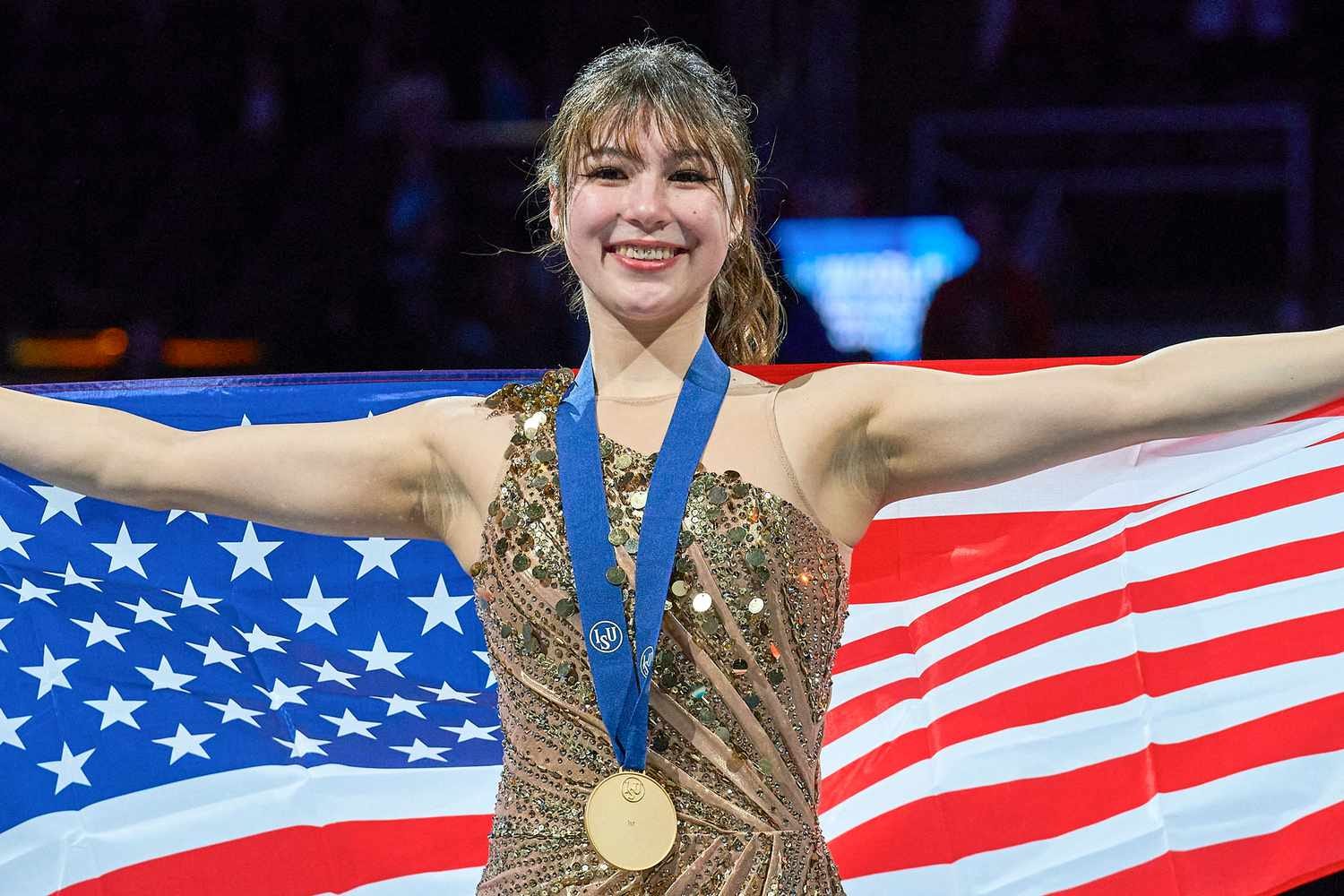
Figure skating is having a moment right now, in large part thanks to Alyssa Liu and the Winter Olympics. It’s been a pleasure to follow along, and I’m amazed and delighted that someone like Alyssa was able to win, after years of dominance by skaters that prioritized jumps and slimness over health and happiness.
Like Alyssa, I too spent most of my early life figure skating due to a mixture of passion and parental pressure. Of course, unlike Alyssa, I never got close to the Olympics, though I was decent enough that my Instagram videos to this day still impress my friends and garner lots of likes.
A rusty John completing a 2A at the Yerba Buena ice skating rink.
Before AI research and math olympiads, figure skating was my main activity and the center of my identity. I was a member of the Swedish national team, was ranked second best in my age group in Sweden for much of my career, and competed internationally at Junior Grand Prix’s and other competitions. There even was a time in my life when I was really young and really really naive where I dreamt of winning the Olympics :’)
I was never good enough for that, though I was good enough to observe and meet people who were. I practiced in similar ways, in similar locations, competed to similar music in similar outfits. I got to see what made the difference between good and great.
This year, it’ll be 10 years since I retired from figure skating. I’m now entering an age where my relationship with figure skating is starting to come back, but in a very different form – friends and coworkers are starting to think about whether to have their kids try out figure skating. Presumably one day I will consider this too.
10 years is enough time for me to have gained some perspective on what figure skating taught me that was good and things that were bad. For anyone curious about figure skating, either for themselves or for their kids, here’s my reflections on the good and the bad of this lovely sport.
1) A complex mixture of arts and athletics
Figure skating is a lovely sport in large part because it combines arts and athletics in a way that feels unique and pretty well balanced. During competitions, you are scored separately on the technical tricks performed (TES) and the artistry of your performance (PCS). There are certainly skaters with less artistic ability who win through sheer technical dominance, but in general skaters try quite hard to improve on both axes.
The breadth of skill needed for skating results in a very interesting sport to learn and to perform – one day you’re in ballet or hip hop class practicing your musicality and facial expressions, the other day you’re at the gym doing squats to strengthen your jumps, and then the next day you’re running a 5k to push your stamina. Two days later you’re at a competition mixing dance with jumps and spins.
There are lots of layers of complexity that many audience members are not aware of – the spin positions and twists in step sequences are not picked at random. Rules update yearly so as to require the skaters to showcase creativity and skill in order to maximize the points earned from the different elements in their program. Some skaters find this aspect of the sport fun, while others find it annoying. Either way, understanding how to improve as a skater and maximize your score is a key part of the sport and honestly very intellectually demanding.
2) Athletics, bodies, and injuries
Like all sports, figure skating takes a heavy toll on the body. Ankle, knee, hip, and back injuries from jumps are extremely common, though unlike contact sports you’re mostly safe from extreme injuries like concussions. Some people disagree with this, but my experience after talking to many skaters is that it is possible to practice jumps with appropriate falling technique that lets you avoid hitting your head on the ice.
I myself had a bad hip injury and a bad knee injury, both of which slightly impair me to this day. It’ll probably get worse with the years, but I find this to be a worthy sacrifice for the experiences I had as a figure skater.
The experience varies a lot however, and some people suffer much worse injuries and bodily damages. In the 2010s, an infamous Russian coach named Eteri Tutberidze received a lot of criticism for her intense training regime which produced girls that won senior international competitions around the ages of 15-17 before burning out and being forced into retirement before reaching adulthood.
Today, with the increase in minimum age for participating in senior international competitions, this phenomenon has waned a bit. The U.S. also treats their skaters better, but under the pressure to perform it remains common for skaters to suffer injuries, eating disorders, body dysmorphia, and so on.
3) Individual vs team sports
Although team skating as a category exists, and pair skating / ice dancing remains quite popular, the vast majority of public mindshare is taken up by individual figure skating. Needless to say, individual sports are very different from team sports, and this mainly shows in the way sports psychology and mentality affects how successful you are as an athlete.
Team sports certainly have stars with big egos that can be hard to work with, but this tends to be penalized in ways that you don’t see in figure skating. Your wins are your own work, and your losses your own fault. There is no teammate to blame, no bad passes. Similarly, there is no opponent on the field. You are not fighting against anyone, the enemy is yourself – no one else can prevent you from landing that jump or completing that spin.
The result is that skaters sometimes develop a different sports psychology than team sports athletes. I don’t think figure skating is likely to produce dramatic differences in people, such as turning an otherwise lovely person into a diva, but you do get less exposure to team dynamics which some people may think is an unfortunate life experience to miss out on.
4) Mental fortitude
The most intense moment of my life to this date was the beginning of my short program at the Youth Olympics in Innsbruck in 2012. It was my first serious international competition and the audience was larger than at any other competition I had participated in. I was nervous as all hell.
Leading into the first jump, I found myself unable to think at all. My fight or flight response shut down my brain, and so my body operated on autopilot. Fortunately, I landed my first triple jump based on sheer muscle memory, and the rest of the program went decently well.
There were lots of other intense moments. Arguments with parents and coaches, tough beats at important competitions, bad practice sessions where you fall on every jump, the first time you attempt a new jump, the list goes on. Figure skating is not unique to any other sports in that it requires mental fortitude in a way that academics simply doesn’t – I never felt nearly the same intensity in my academic career, even at IMO, as I did in figure skating.
Does this mental fortitude transfer to other domains in your life? I think so, but it’s not obvious. My impression is that mental fortitude like “grit” is useful in academics, but you end up having to re-develop it a bit, because grit in sports and in academics feels rather different. Knowing what it feels and looks like is very valuable though, and I do think it helped me in my math career.
5) How much do you want it
As with other sports, you’re somewhat bounded in how far you can go by how talented you are. However, if you are lucky and are born with good genetics and a good “sense” for how skating works, you’ll at some point have to ask how much you want it. This is a tough decision to make, but a great one to face early in your life! Competing internationally, not to mention gunning for the Olympics, takes tremendous sacrifice, and there’s no rule that says that participating in the Olympics is a better way to live life than any other path you could take. I chose academics at the age of 18 and never regretted that decision.
My best advice here is that most people don’t spend their time particularly effectively, and so you should ask yourself what life would look like if you went for it versus if you didn’t, and see what your gut reaction says about which path you want more. Trust your gut, it knows what you want better than your brain does.
Hope this was helpful, if you enjoy skating or want to explore a new hobby, come visit the Yerba Buena Ice Skating & Bowling Center! They have both freestyle sessions for experienced skaters and public ice for beginners on Saturdays. I’m usually at the freestyle session at 9:00am.
So cool